Tattoos have evolved from an alternative subculture into a mainstream form of personal expression. While choosing the perfect design or finding the right artist occupies most of our focus, a fascinating biological process unfolds just beneath the skin.
Recent research reveals that tattoo pigments are far from inert. From the moment the needle breaks the surface, your ink initiates a complex, lifelong relationship with your immune system; and scientists are only just beginning to map out exactly how it works.
The Immediate Response: Why Your Body Fights the Needle
To understand how tattoos interact with your biology, you have to look at how they are applied. A tattoo machine moves a needle up and down rapidly, depositing ink into the dermis, the middle layer of skin situated roughly 1.5mm to 2mm below the surface.
Because this process punctures the skin barrier, your body instantly treats the session as both an injury and a foreign invasion. The immune system immediately deploys its first line of defense: white blood cells known as macrophages.
These specialized cells rush to the site of the tattoo with a clear mission: engulf the invading ink particles, break them down with enzymes, and flush them out through the lymphatic system.
The Secret to Permanence: A Continuous Cellular Cycle
If your immune system is actively trying to destroy the ink, why doesn’t your tattoo simply fade away after a few weeks?
The answer lies in the sheer size of the pigment particles. Modern tattoo ink droplets are simply too massive for macrophages to break down or carry away. When a macrophage swallows an ink particle and realizes it cannot destroy it, the cell gets stuck in place, holding onto the pigment.
Like all cells, these white blood cells eventually reach the end of their lifespan and die. When they break down, the trapped ink is released back into the dermis. However, the body immediately sends a new wave of fresh macrophages to the area to swallow the freed ink. This continuous, silent loop of capturing, releasing, and recapturing pigment is what keeps your artwork locked in place and looking sharp for decades.
Beyond the Skin: How Ink Travels Through the Body
While the majority of the pigment stays locked in the dermis, science shows that smaller ink particles do manage to escape. These tiny fragments enter the lymphatic system; the drainage network your body uses to filter out waste, toxins, and cellular debris.
Research has found that these migrating ink particles eventually accumulate in the lymph nodes, which are critical hubs for your immune defenses. When examining tissue, scientists can often see lymph nodes stained the exact color of a person’s tattoo.
Recent studies published in journals like Proceedings of the National Academy of Sciences (PNAS) show that this ink accumulation keeps the lymph nodes in a state of low-grade, active inflammation for up to two months post-tattoo. While this doesn’t mean tattoos are unsafe, it proves that your body is constantly communicating with and adjusting to the presence of the pigment.
The Role of Ink Ingredients and Colours
The specific impact on your immune system can also vary based on the types of ink used. Modern professional inks are highly refined, but different colors rely on different compounds:
-
Black Inks: Typically made from carbon black, these inks are highly stable, though they often contain polycyclic aromatic hydrocarbons (PAHs), which are widely studied by organic chemists.
-
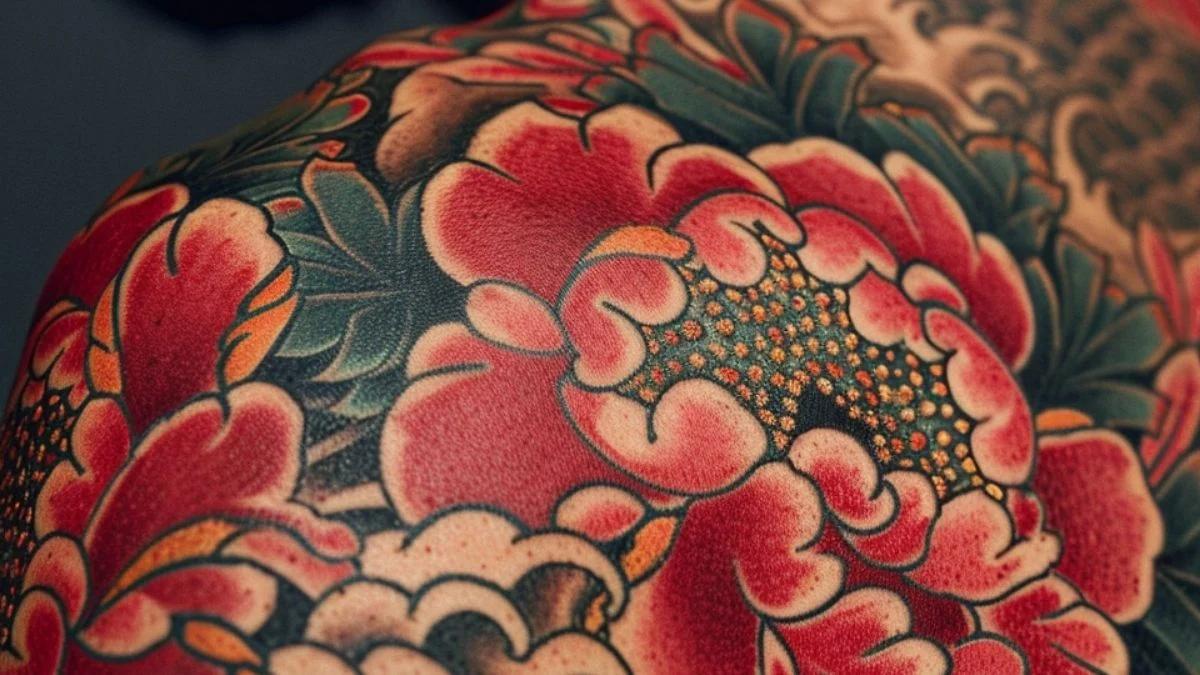
Coloured Inks (Red, Orange, Yellow): These shades often rely on organic pigments or metal salts. Red ink, in particular, is known to trigger more active immune responses, sometimes causing localized swelling, itching, or granulomas (small nodules formed when the immune system tries to wall off material it can’t remove) if exposed to heavy sunlight or changes in body chemistry.
The Ultimate Immune System Workout?
Interestingly, this constant interaction isn’t necessarily a bad thing. Some research suggests that the ongoing cellular activity acts like a regular workout for your health defenses. Because your immune system is always actively monitoring the ink site, it stays highly responsive.
Furthermore, data shows that stress hormones like cortisol actually drop during subsequent tattoo sessions, helping the body manage stress better over time.
Enjoying Your Ink Safely
Tattoos represent a lifelong relationship between your skin, your identity, and your internal biology. Because your body works hard to protect and preserve your body art, choosing a studio that prioritizes medical-grade hygiene, top-tier equipment, and premium ink formulations is essential.
If you have an underlying immune condition, it is always a smart move to consult with your doctor before booking. For everyone else, your healing process is a testament to how incredibly resilient and adaptive your body truly is.
Ready to start your next custom piece? Get in touch with the team at Jaded Ink today to book your consultation with our professional artists.